

In July 2020, New York regulators delivered a blunt message to one of the world’s biggest banks. Deutsche Bank AML failures had reached a point where enforcement was unavoidable. The New York State Department of Financial Services (NYDFS) imposed a $150 million civil penalty, citing years of weak controls tied most visibly to the bank’s relationship with Jeffrey Epstein.
This was not about a single missed alert. It was not a technical glitch. Instead, it was a long-running breakdown in judgment, follow-through, and governance. Risk was identified early. Red flags were visible. Yet the bank continued, often treating serious warning signs as routine behavior.
For beginners trying to understand how AML failures really happen, this case offers a rare, uncomfortable look inside a large institution where compliance existed on paper but failed in practice.
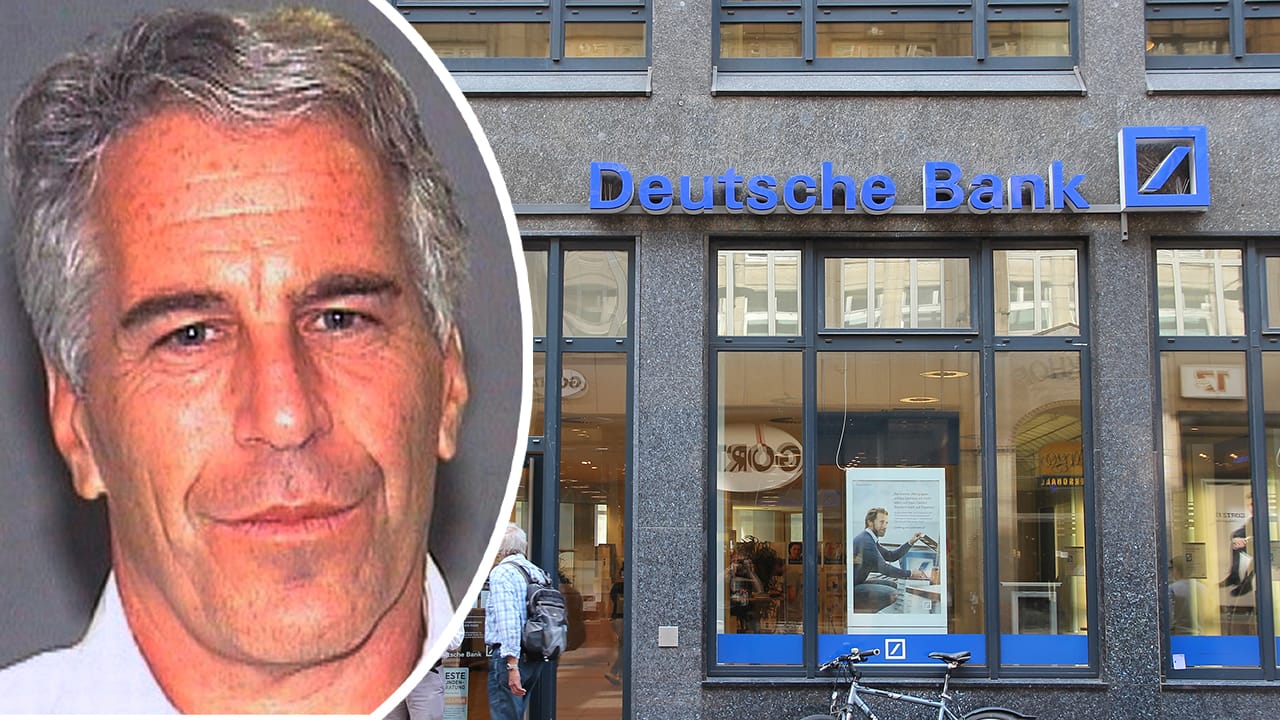
How Deutsche Bank AML Failures Took Shape Around Jeffrey Epstein
By the time Deutsche Bank onboarded Jeffrey Epstein in August 2013, his past was no secret. He had pleaded guilty in 2007 to soliciting an underage prostitute. He had served prison time. He had settled multiple civil claims linked to that conduct. Internal documents at the bank acknowledged all of this.
Yet those same documents also highlighted something else. The relationship was described as financially attractive, with projected account flows in the hundreds of millions of dollars. That tension—between reputational risk and revenue—sat at the center of what followed.
Epstein was classified as high risk. He was even treated as an “Honorary PEP” because of his connections to powerful figures. On paper, that classification should have triggered enhanced scrutiny. In reality, it often became little more than a label.
Over time, Deutsche Bank opened more than 40 accounts for Epstein and related entities. One of the most notable was the Butterfly Trust, which named beneficiaries that included individuals publicly linked to Epstein’s earlier criminal conduct. This structure alone should have raised alarms about how funds might be used.
Transactions began to flow. There were frequent payments to women with Eastern European surnames. There were large legal and settlement-related payments. There were repeated cash withdrawals carried out by Epstein’s attorney, often just below reporting thresholds. When questioned, explanations were thin. “Tuition.” “Travel.” “Expenses.”
The problem was not that the bank lacked information. NYDFS later emphasized that Deutsche Bank knew Epstein’s background and knew the risks that background implied. The failure was that monitoring was not designed around those risks.
After an internal review in early 2015, the bank’s reputational risk committee imposed conditions on the relationship. These conditions were meant to tighten oversight. Instead, they were misunderstood, poorly communicated, and unevenly applied. Relationship managers continued business largely as before. Some staff were not even aware the conditions existed.
Perhaps the most telling detail came from how transactions were assessed. Monitoring teams were guided to treat activity as normal if it resembled Epstein’s past behavior. That logic cut against the core idea of AML. High-risk customers are not supposed to define what “normal” looks like. Their known risks are supposed to redefine scrutiny.
By the time the relationship ended in December 2018, years of questionable activity had passed through the bank without meaningful challenge. For NYDFS, this was not a close call. It was a textbook example of Deutsche Bank AML failures driven by weak governance and misplaced comfort.

Why Regulators Considered These AML Failures So Serious
NYDFS did not frame this case as a moral judgment. It framed it as a control failure. Banks, the regulator said, act as a critical line of defense against illegal financial activity. When that line breaks, the consequences extend beyond one institution.
What made the Epstein relationship especially damaging was how clearly the risk was understood from the start. This was not a hidden criminal network or an obscure typology. Epstein’s history was public, documented, and discussed internally. That removed any excuse for superficial monitoring.
The regulator also focused heavily on governance. Key decisions were made informally. Documentation was inconsistent. Committee meetings lacked proper records. Conditions imposed at senior levels did not reach the teams responsible for day-to-day monitoring. In several instances, the bank could not show how or why critical approvals had been granted.
This pattern was not limited to Epstein, though NYDFS kept him at the center of the narrative. The consent order also referenced weaknesses in correspondent banking relationships. However, those issues mattered mainly because they showed the same habit: identifying risk without acting decisively on it.
For beginners, this distinction matters. Regulators do not expect banks to eliminate all risk. They do expect banks to respond when risk becomes obvious and persistent. In this case, NYDFS concluded that Deutsche Bank repeatedly failed that expectation.
What the Epstein Case Teaches About AML in the Real World
The $150 million penalty made headlines, but the deeper lesson sits elsewhere. Deutsche Bank AML failures were not caused by a lack of rules or technology. The bank had policies. It had monitoring systems. It had committees and escalation pathways.
What it lacked was follow-through.
High-risk classifications did not translate into tougher controls. Red flags did not lead to decisive action. Senior oversight did not ensure that conditions were implemented on the ground. Over time, abnormal activity began to feel routine.
This is how AML failures often develop. Not through dramatic breaches, but through gradual normalization. Each transaction is explained away. Each review ends with “monitor and continue.” Eventually, the entire system adapts to risk instead of managing it.
The Epstein case also highlights the danger of informal governance. When approvals rely on undocumented conversations or personal assurances, accountability erodes. When conditions are not written, tracked, and enforced, they may as well not exist.
For those new to AML, this case underscores a hard truth. Compliance is not proven by classification alone. It is proven by what changes after classification. Monitoring must evolve. Questions must become sharper. And sometimes, relationships must end—even when they are profitable.
NYDFS made that expectation clear. The bank paid the fine. It also committed to ongoing remediation and oversight. But the reputational cost and regulatory scrutiny did not disappear with the payment.
Sources
- NYDFS Consent Order (Deutsche Bank) — July 6, 2020.
- NYDFS Press Release — July 7, 2020.
- Willkie Compliance Concourse summary — July 9, 2020.
- MoneyLaundering.com coverage — July 7, 2020.
- Reuters coverage — July 7, 2020.
- FinCEN Section 311 action background (FBME) — July 17, 2014 and related FinCEN releases.
- AUSTRAC guidance on correspondent banking due diligence.
Internal reading suggestions:
- Australia’s Tranche 2 AML reforms and why regulators focus on gatekeepers
- Deutsche Bank Mirror Trade Scandal: $10 Billion Loophole Exposed
amlcams.info is an independent educational resource and is not affiliated with, endorsed by, or sponsored by ACAMS. Not legal advice.