
The Promise—and Pitfall—of Innovation
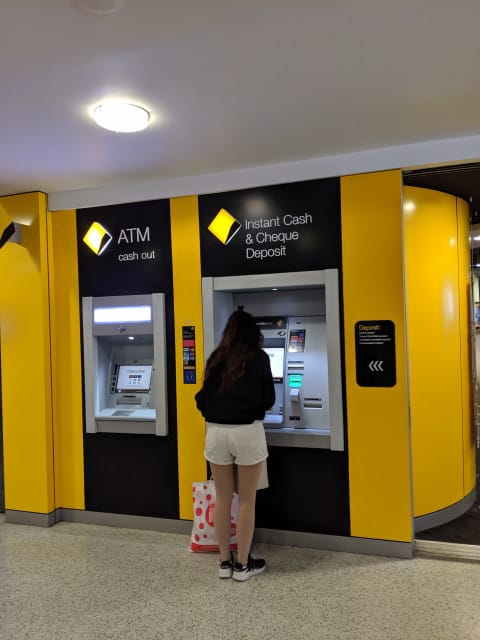
In 2012, the Commonwealth Bank of Australia (CBA) launched Intelligent Deposit Machines (IDMs), promoted as a leap forward in customer convenience. For the first time, customers could deposit cash or cheques instantly—no queues, no tellers, and immediate availability of funds. It was a bold vision to modernize banking and stay ahead of competitors.
But beneath the promise lay a flaw. The machines carried no meaningful daily deposit limits, allowing sums of $20,000 or more to be placed without thorough checks. That oversight created fertile ground for criminals. Using techniques like structuring—breaking large illicit sums into smaller deposits—organized crime quickly recognized IDMs as a perfect laundering tool.
The gap between innovation and compliance would prove devastating, exposing CBA to one of the most damaging scandals in Australian banking history.
Criminal Syndicates Exploit the Loopholes
CBA’s IDMs became an inadvertent ally to organized crime. Syndicates exploited the machines relentlessly, funnelling illicit cash into the financial system with alarming ease.
- Criminal networks laundered at least $75 million through IDMs.
- A syndicate behind a record $315 million methamphetamine bust deposited over $21 million into accounts using these machines.
- Other groups successfully pushed funds into terrorism-linked accounts, heightening national security risks.
The appeal to criminals was obvious:
- Anonymity — Deposits could be made with little oversight, no interaction with staff, and minimal customer verification.
- Accessibility — Hundreds of IDMs were deployed nationwide, operating 24/7 and enabling deposits at all hours.
- Speed — Funds were instantly credited, allowing immediate transfers, often overseas within minutes.
Beyond structuring, criminals used cuckoo smurfing, a method where unsuspecting third parties make deposits on behalf of syndicates, adding another layer of distance between criminals and their funds.
The negligence meant Australia’s financial system was effectively weaponized against itself. The damage extended beyond abstract dollar figures:
- Drug traffickers expanded operations, with laundered proceeds fueling further importation and distribution.
- Communities bore the brunt of rising drug-related crime, enabled by illicit cash that should have been intercepted.
- National security was compromised, as unchecked money reached accounts tied to extremist activity.
What was designed to improve convenience for everyday Australians instead gave criminal syndicates a near-perfect laundering mechanism.
AUSTRAC’s Investigation and Legal Action
In By 2017, AUSTRAC—the financial intelligence unit tasked with enforcing anti-money laundering and counter-terrorism financing laws—launched a sweeping investigation into CBA’s compliance. The probe uncovered systemic and long-running failures.
Key findings included:
- No meaningful risk assessments for IDMs from their launch in 2012 until late 2017.
- Failure to implement mitigation controls until April 2018—nearly six years after rollout.
- Between November 2012 and September 2015, CBA failed to file 53,506 threshold transaction reports (TTRs), covering $625 million in unreported deposits.
- A failure to monitor 778,370 customer accounts for suspicious activity over a three-year period.
- Repeated delays or failures to lodge Suspicious Matter Reports (SMRs), even after law enforcement specifically requested monitoring of suspect accounts.
AUSTRAC alleged 53,750 breaches of the AML/CTF Act, emphasizing that CBA’s conduct was not just administrative negligence but a systemic failure that directly harmed the community.
Faced with overwhelming evidence, CBA admitted to the breaches. In 2018, the case culminated in a record civil penalty of $700 million, plus $2.5 million in legal costs—the largest corporate fine in Australian history at the time.
Nicole Rose, AUSTRAC’s CEO, underscored the gravity of the case, noting that such failures enable organized crime, drug trafficking, and terrorism financing to flourish—putting communities at risk and undermining trust in the financial system.
The Damage Beyond Dollars
The scandal’s impact extended far beyond the $700 million penalty. It exposed how weak compliance frameworks can amplify criminal activity and damage both institutions and society at large.
For CBA, the consequences were severe:
- Financial loss: The penalty slashed profits and imposed long-term compliance costs.
- Reputation damage: Once seen as a leader in innovation, CBA became synonymous with regulatory failure. Public trust, carefully built over decades, was eroded almost overnight.
- Operational overhaul: The bank was forced into sweeping reforms, significantly expanding compliance functions, technology, and reporting systems.
For the broader community, the damage was even more troubling:
- Drug syndicates strengthened their grip, using laundered proceeds to expand supply chains and saturate markets. This fueled addiction, violence, and community harm.
- Law enforcement was hampered, as vital intelligence on suspicious cash flows was lost for years. With more than 53,000 unreported large cash transactions, authorities were effectively blind to massive streams of illicit money.
- Terrorist financing risks escalated, as unchecked deposits made it easier for funds to reach groups hostile to Australia’s security interests.
The case demonstrated that AML failures are not just compliance issues—they are public safety issues. When banks neglect their reporting obligations, criminals operate unchecked, and communities pay the price.