
When Arthur Budovsky’s world came crashing down in May 2013, it wasn’t just another tech entrepreneur facing legal troubles. The arrest in Madrid marked the end of what prosecutors would call the largest money laundering operation in history. Liberty Reserve, the Costa Rica-based digital currency service Budovsky had built, had become something far more sinister than anyone imagined.ice+1
The numbers tell a staggering story. Over seven years, Liberty Reserve processed more than 55 million transactions worth over $8 billion in criminal proceeds. Behind the facade of a legitimate payment processor lay a carefully constructed empire designed specifically to help criminals hide their dirty money.justice+1
The Making of a Digital Criminal Haven
Budovsky didn’t stumble into the world of digital currencies by accident. His journey began with failure and legal trouble. In 2006, he was convicted in New York State for operating an unlicensed money transmission business called GoldAge. Rather than deterring him, this experience became his education in what not to do next time.
Together with Vladimir Kats, his partner from their teenage years working as camp counselors in Brooklyn, Budovsky launched Liberty Reserve in 2006. They relocated the operation to Costa Rica, hoping to avoid the regulatory scrutiny that had derailed their previous venture. What emerged was a system that prosecutors would later describe as being “specifically designed to facilitate money laundering in cyber space”.
The platform’s design was deceptively simple yet devastatingly effective. Users needed only a name, birth date, and email address to register. No identity verification was required. Fake names like “Mickey Mouse” and “Donald Duck” were not just accepted but common. This wasn’t an oversight – it was a feature.
Liberty Reserve Dollars, the platform’s currency unit, could be purchased through a network of third-party “exchangers”. These largely unregulated brokers operated from high-risk jurisdictions around the world. Once funds were converted to Liberty Reserve Dollars, they could be transferred instantly and anonymously to any other account holder. For an additional “privacy fee,” users could even hide their account numbers from recipients.
A Global Network of Crime
The platform quickly became the preferred payment system for the world’s most sophisticated criminal operations. By the time authorities shut it down, Liberty Reserve had over one million users worldwide, with more than 200,000 in the United States alone.
The criminal clientele was diverse and international. Carding forums used it to trade stolen credit card information. Ponzi scheme operators relied on it to move funds between victims and conspirators. Identity theft rings laundered their proceeds through the system. Perhaps most disturbing, child exploitation networks used Liberty Reserve to monetize their horrific crimes.
The platform’s appeal to criminals was obvious. Brian Krebs, a leading security expert, described the immediate impact of Liberty Reserve’s shutdown on criminal forums: users were reporting “steep losses” and significant “pain” to their operations. The service had become so integral to cybercrime that its removal caused genuine disruption to criminal enterprises worldwide.
The Web of Deception
By 2008, warning signs were mounting. Liberty Reserve had begun the process of applying for a money transmitting license in Costa Rica, which legally required hiring an AML compliance officer. The company created a Government Administrative Area to give this officer oversight of their systems, but it was little more than theater.
The compliance officer found statistics were being falsified and transparency was non-existent. By 2011, frustrated by the lack of cooperation, the AML officer resigned and reported the company for suspicious activity. This report would eventually find its way to U.S. authorities, setting the stage for the massive international investigation that followed.
Meanwhile, Budovsky and his team were taking increasingly desperate steps to avoid detection. They lied to anti-money laundering authorities in Costa Rica and pretended to shut down the company when they learned of the U.S. investigation. Instead, they continued operating through a network of shell companies, moving millions of dollars through accounts in Cyprus, Russia, China, Hong Kong, Morocco, Spain, and Australia.
The International Takedown
The investigation that brought down Liberty Reserve was unprecedented in its scope and coordination. The Global Illicit Financial Team, consisting of U.S. Immigration and Customs Enforcement’s Homeland Security Investigations, the U.S. Secret Service, and the IRS Criminal Investigation Division, worked with law enforcement agencies across 17 countries.
On May 28, 2013, the hammer fell. Arthur Budovsky was arrested in Madrid. Vladimir Kats was taken into custody in Brooklyn. Azzeddine El Amine, a Liberty Reserve financial manager, was arrested in Spain. Mark Marmilev and Maxim Chukharev, who maintained the platform’s technology infrastructure, were arrested in Brooklyn and Costa Rica respectively.
The same day, FinCEN took the extraordinary step of naming Liberty Reserve a “financial institution of primary money laundering concern” under Section 311 of the USA PATRIOT Act. This was the first time such measures had been used against a virtual currency provider. The designation effectively cut Liberty Reserve off from the U.S. financial system.
Computer servers in Costa Rica and Switzerland were seized. Approximately $25 million in assets was frozen across multiple jurisdictions. The Liberty Reserve website went dark, leaving millions of users – many of them criminals – unable to access their funds.
Justice Served
The legal consequences were severe and swift. Vladimir Kats, perhaps recognizing the futility of fighting the charges, pleaded guilty in October 2013 to money laundering, operating an unlicensed money transmitting business, marriage fraud, and receiving child pornography. He was sentenced to 10 years in prison and ordered to forfeit $6.5 million.
Arthur Budovsky fought extradition from Spain but eventually faced the inevitable. In January 2016, he pleaded guilty to conspiracy to commit money laundering. Judge Denise L. Cote, noting that he showed no “genuine remorse” for crimes that created “countless victims of fraud around the world,” sentenced him to 20 years in federal prison. He was also ordered to pay a $500,000 fine and forfeit $122 million in assets.
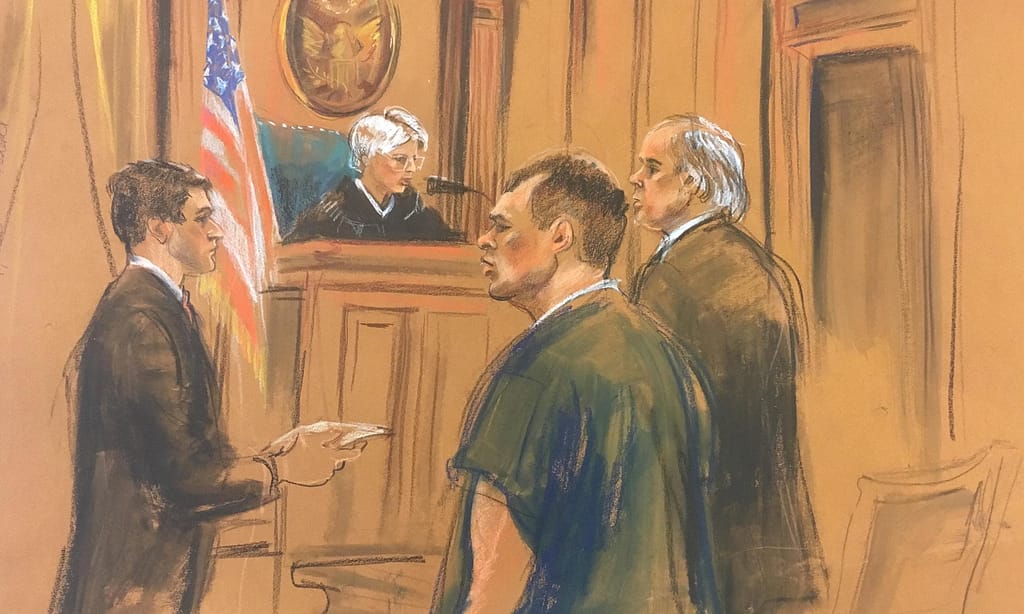
Three other defendants – Mark Marmilev, Maxim Chukharev, and Azzeddine El Amine – also pleaded guilty and received sentences ranging from three to five years. Two additional suspects remained fugitives in Costa Rica.
A Regulatory Wake-Up Call
The Liberty Reserve case sent shockwaves through the financial regulatory community. Just three months before the takedown, in March 2013, FinCEN had issued groundbreaking guidance clarifying that administrators and exchangers of virtual currency were considered Money Services Businesses subject to federal regulation. The Liberty Reserve investigation provided stark evidence of why such regulation was necessary.
The case became a catalyst for international regulatory action. In 2014, the Financial Action Task Force issued its first guidance on virtual assets, establishing the framework for Know Your Customer requirements and transaction monitoring. This guidance would evolve into the comprehensive “Travel Rule” that now requires crypto exchanges to share sender and recipient information for large transactions.
The European Union’s Fifth Anti-Money Laundering Directive, implemented in 2018, extended AML obligations to virtual currency exchanges and wallet providers across all EU member states. The Liberty Reserve case was frequently cited as justification for these new requirements.
The Lasting Legacy
More than a decade later, the Liberty Reserve case remains the gold standard for prosecuting digital currency money laundering operations. It demonstrated that virtual currencies, despite their technological sophistication, could not operate outside traditional anti-money laundering frameworks.
The case also highlighted ongoing vulnerabilities in the digital asset ecosystem. While legitimate cryptocurrency exchanges now operate under strict regulatory oversight, investigators continue to encounter similar risks with crypto mixers, privacy coins, and unlicensed offshore exchanges. The techniques Budovsky pioneered – minimal identity verification, anonymous transactions, and complex networks of intermediaries – continue to appear in new forms.
Law enforcement agencies gained valuable experience from the Liberty Reserve investigation. The international cooperation required to shut down the operation became a model for future cases involving transnational digital crime. The forensic techniques developed to trace Liberty Reserve transactions helped investigators crack other major cases involving digital currencies.
Perhaps most importantly, the case established clear legal precedents. Courts confirmed that operating a digital currency exchange without proper licensing and anti-money laundering controls constitutes serious federal crimes, regardless of where the operation is based. The substantial sentences imposed on Budovsky and his co-conspirators sent an unmistakable message to others who might consider similar ventures.
Modern Parallels and Ongoing Vigilance
Today’s cryptocurrency landscape bears little resemblance to the Wild West environment that enabled Liberty Reserve to flourish. Major exchanges like Coinbase, Binance, and Kraken operate under comprehensive regulatory frameworks, implementing sophisticated Know Your Customer procedures and transaction monitoring systems that would have made Liberty Reserve’s business model impossible.
Yet the fundamental appeal that made Liberty Reserve attractive to criminals – the ability to move money quickly and anonymously across borders – remains inherent in digital currencies. Regulators and law enforcement agencies continue to grapple with newer challenges like decentralized exchanges, privacy-focused cryptocurrencies, and mixer services that echo Liberty Reserve’s original promise of financial anonymity.
The Liberty Reserve story serves as both a cautionary tale and a testament to the power of international law enforcement cooperation. It proved that no matter how sophisticated the technology or how carefully constructed the operation, criminals who attempt to build digital empires on the foundation of money laundering will eventually face justice.