
By Viktor Ha | April 2026 | AML-CAMS Blog
TL;DR: In September 2024, Wynn Las Vegas forfeited $130 million — the largest criminal forfeiture by a US casino — after admitting it conspired with unlicensed money transmitters and knowingly allowed proxy gambling schemes designed to defeat AML controls. The core failure wasn’t a technology gap or a resource problem. It was a beneficial ownership failure: Wynn processed millions in transactions for patrons whose true identity, source of funds, and purpose were deliberately obscured — and employees knew it. The typologies at the centre of the case — Human Head gambling and Flying Money — aren’t exotic or hypothetical. Australian practitioners will recognise them immediately. Crown and Star were running variations of the same playbook.
A Satchel, a Hotel Room, and $130 Million
It started with a tip.
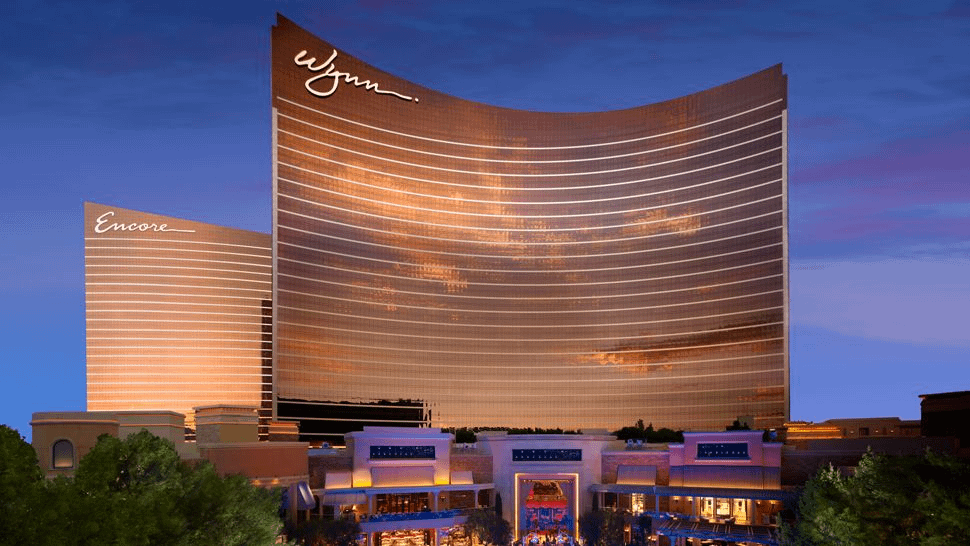
Casino staff at Wynn Las Vegas noticed a pattern. A third party would arrive at the casino carrying a satchel. They would enter a hotel room with a casino host and a high-roller gambler. Shortly afterwards, with minimal or no play, they would leave. Staff weren’t entirely sure what was happening — but it was unusual enough to flag to the IRS.
The individuals were subsequently identified as Bing Han, Fan Wang, Lei Zhang and Liang Zhou — Chinese nationals in their 30s and 40s, living in Las Vegas, operating unlicensed money transmitting businesses. The investigation that followed ran for a decade and culminated in Wynn Las Vegas agreeing to forfeit $130,131,645 under a non-prosecution agreement with the US Department of Justice — the largest criminal forfeiture ever agreed to by a US casino.
What the investigation uncovered wasn’t a sophisticated scheme hidden deep in Wynn’s systems. It was a set of typologies visible to employees at ground level, enabled by a compliance program that chose not to ask the right questions.
That’s the casino AML beneficial ownership failure at the heart of this case. And it matters well beyond Las Vegas.
The Two Typologies
Human Head Gambling (ren tou / 人头)
The first typology is proxy gambling — known in Mandarin as ren tou, or Human Head. The mechanics are straightforward: a proxy purchases chips and gambles on behalf of a true patron who is either unable or unwilling to transact under their own name.
Why would someone be unwilling to gamble under their own identity? The DOJ’s non-prosecution agreement with Wynn is direct on this: in some instances, because of Bank Secrecy Act or AML laws. The true patron cannot or will not conduct financial transactions in their own name because doing so would trigger regulatory scrutiny — currency transaction reports, suspicious activity reports, customer identification requirements.
The proxy solves that problem. The casino sees a gambler placing bets. The compliance system sees a transaction under the proxy’s name. The true patron — whose source of funds, whose criminal history, whose sanctions status, whose PEP connection — is invisible to the AML program entirely.
Wynn knowingly allowed this form of gambling without scrutinising the true patron’s funds and without filing suspicious activity reports. The DOJ noted one specific example: Wynn continued to process approximately $1.4 million in transactions for an individual who had been publicly linked to proxy gambling two years earlier, and who had been denied entry to the United States a year earlier due to suspected association with a transnational criminal organisation. No SAR was filed on that individual. Retroactively or otherwise.
Flying Money (qian chen / 钱沉)
The second typology is an informal cross-border value transfer — qian chen, or Flying Money. A money processor, acting as an unlicensed money transmitting business, collected US cash from third parties in the United States and delivered it to a Wynn patron who could not otherwise access cash in the US. The patron then electronically transferred the equivalent value of foreign currency — typically from a Chinese bank account — to a foreign account designated by the money processor.
The effect: Chinese capital controls are bypassed. The patron gets chips in Las Vegas funded by money sitting in China, without that movement ever touching the formal cross-border banking system. The casino sees a cash deposit. The AML program sees nothing that connects to the underlying transaction chain.
This is hawala operating in a casino context — an informal value transfer system where the physical movement of money and the corresponding obligation are settled in parallel, in different jurisdictions, without touching regulated channels.
The Broader Scheme
Beyond the two named typologies, Wynn’s conduct extended to a systematic arrangement with third-party independent agents who acted as unlicensed money transmitting businesses to recruit foreign gamblers to the casino.
For gamblers who needed funds available to play or to repay debts to Wynn, the independent agents transferred their money through companies, bank accounts and third-party nominees in Latin America and elsewhere, ultimately funnelling those funds into a Wynn-controlled bank account in California. From there, funds moved into the cage account and were credited to individual patron accounts.
One agent, Juan Carlos Palermo, conducted more than 200 such transfers involving over 50 foreign casino patrons and more than $17.7 million. He was not the only one. The investigation produced charges and guilty pleas from 15 other defendants for money laundering, unlicensed money transmitting, or related offences.
Wynn employees carried out these transactions with the knowledge of their supervisors. This was not a rogue employee problem. It was an institutional culture that prioritised high-roller revenue over compliance obligations.
The Casino AML Beneficial Ownership Failure
Step back from the specific mechanics and what you see is a casino AML beneficial ownership failure playing out across multiple channels simultaneously.
Beneficial ownership in a casino context isn’t just about knowing who owns the account. It’s about knowing who is actually conducting the transaction — who is the true patron, who is funding the chips, whose risk profile should be assessed, and whose suspicious activity should be reported.
In the Human Head scheme, Wynn knew that proxies were gambling on behalf of others. Employees saw the true patron standing behind the proxy, directing the play. The compliance program nonetheless accepted the proxy as the customer. The true patron — the one whose source of funds mattered, whose AML risk profile was relevant, whose activity should have generated a SAR — was treated as a non-person.
This is not a gap that better transaction monitoring software closes. It’s a failure at the point of customer acceptance and ongoing CDD. The information existed. Staff had it. The institution chose not to act on it.
The DOJ made the point precisely: Wynn knowingly allowed these schemes without scrutinising the source of funds and without reporting the suspicious activity. Knowingly. That’s the word that carries all the weight.
Why This Lands in Australia
Australian AML practitioners don’t need to look hard to find the Australian version of this case.
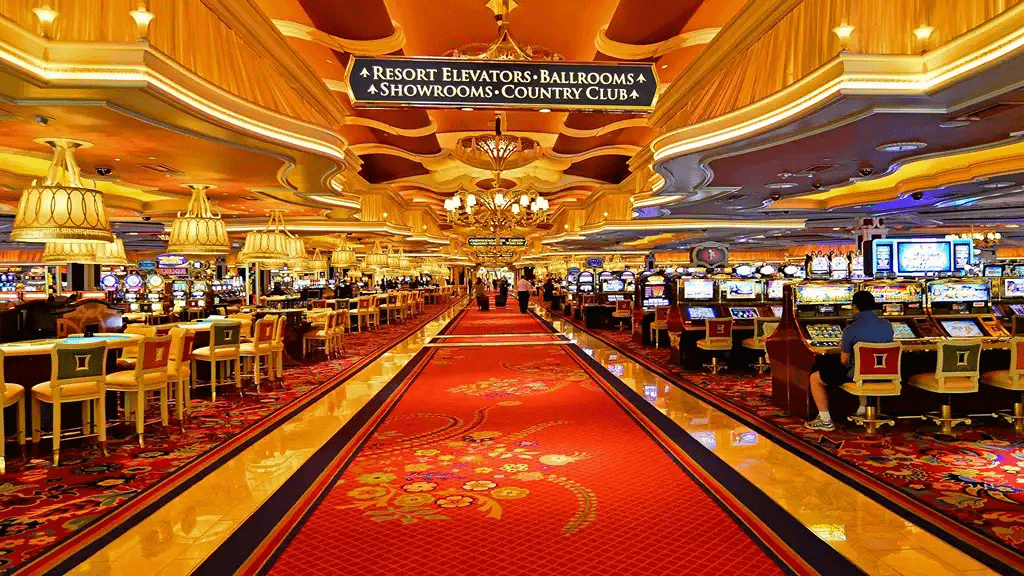
Crown Resorts and Star Entertainment were operating variations of the same fundamental scheme. The mechanism was different — China UnionPay cards processed as hotel expenses rather than proxy gambling — but the underlying logic was identical: allow wealthy Chinese patrons to move money into the casino through channels that defeated AML controls, and treat the compliance obligation as a problem to be managed around rather than applied.
Crown Melbourne’s Royal Commission found that wealthy Chinese patrons were assisted in illegally transferring up to $160 million in funds from China through the UnionPay scheme, with transactions fraudulently characterised as hotel expenses to circumvent both Chinese capital controls and Australian AML obligations. Crown eventually settled with AUSTRAC for $450 million — at the time the largest penalty in Australian AML enforcement history.
Star’s conduct was arguably more systematic. AUSTRAC’s Federal Court proceedings alleged that Star processed AU$900 million in China UnionPay card withdrawals disguised as hotel expenses, facilitated 369 junket tours through the Suncity Group despite known criminal connections, and extended AU$266.7 million in credit to Suncity’s founder despite Australian authorities raising concerns about his links to organised crime as far back as 2017.
In March 2026, the Federal Court found that Star’s directors and officers breached their core duties over both junket risks and the UnionPay card scheme — a finding that goes directly to governance accountability, not just program design. ASIC alleged that CUP had repeatedly made clear to Star, through NAB, that customers could not use CUP cards for gambling purposes, and that Star continued to allow it regardless.
The casino AML beneficial ownership failure is not a Las Vegas problem. It is a high-roller, cross-border, capital-flight problem that played out in identical form on Australian soil with Australian operators.
The Chinese Money Laundering Network Context
The Wynn case sits within a broader pattern that AML practitioners need to understand: the role of Chinese Money Laundering Networks (CMLNs) in the VIP gambling ecosystem.
The drivers are structural. China imposes a strict USD$50,000 annual limit on the movement of capital by its citizens. For wealthy Chinese nationals seeking to move larger sums — for investment, for gambling, for capital flight driven by political or economic uncertainty — informal channels become the solution. CMLNs match the demand from Chinese nationals for currency outside China with the supply of illicit cash elsewhere, primarily in the United States and across the Asia-Pacific.
Casinos are an attractive node in this system because they operate in cash at scale, have legitimate reasons to accept large transactions, and — when compliance programs are weak — ask few questions about source of funds. The Human Head and Flying Money typologies are purpose-built to exploit exactly that environment.
This is not an abstract typology for Australian institutions. Any bank, remittance provider, or financial institution with exposure to Chinese high-net-worth customers, international casino patrons, or junket-related transaction flows is operating in this risk landscape. The Airwallex AUSTRAC audit earlier this year — which explicitly referenced concerns about cross-border payments and customer understanding — sits in the same ecosystem.
What the Compliance Program Actually Failed to Do
It’s worth being specific about where the AML program broke down at Wynn, because the failures are instructive.
Customer identification at point of service. The Human Head scheme succeeded because Wynn’s KYC was applied to the proxy, not to the true patron directing the play. An adequate CDD program — one that asks not just “who is sitting at the table” but “who is directing the transaction and whose money is this” — closes this gap. That’s not a novel requirement. It’s the beneficial ownership obligation applied to the gaming context.
Ongoing transaction monitoring calibrated to actual risk. The Flying Money scheme processed funds through a Wynn-controlled bank account in California. Those transfers — from unlicensed intermediaries, on behalf of foreign patrons, routed through Latin American entities — should have generated alerts. A monitoring program calibrated to the actual risk profile of international VIP gambling would have flagged them. It didn’t.
SAR filing on known red flags. Wynn processed $1.4 million in transactions for an individual publicly linked to proxy gambling and denied entry to the United States for suspected transnational criminal organisation connections. No SAR was filed. The information was available. The obligation was clear. The filing didn’t happen.
Governance and supervisory accountability. Wynn employees carried out these schemes with the knowledge of their supervisors. The failure wasn’t confined to a single rogue actor. The non-prosecution agreement’s use of “knowingly” is not accidental — it reflects a finding that the institution, not just individuals within it, made a choice.
This maps directly to what AUSTRAC CEO Brendan Thomas has said repeatedly: “AML/CTF is not a back-office function. It requires clear accountability, properly authorised staff who can submit reports and sufficient resourcing to support timely and accurate reporting.” The Wynn case is what it looks like when that accountability doesn’t exist at the top.
The Takeaway for Australian Practitioners
The Human Head typology and Flying Money scheme are documented, named, and well-understood by law enforcement. They are not new. They appear in FATF typology reports, in US FinCEN guidance, and now in a $130 million non-prosecution agreement that is publicly available in full on the DOJ website.
For Australian AML practitioners — particularly those working in banking, remittance, or any institution with exposure to Chinese high-net-worth customers or international gambling flows — the questions worth asking at the desk level are:
Does your CDD process identify the true beneficial owner of a transaction, or just the account holder? In a casino context, the proxy and the patron are two different people. In a banking context, the account holder and the beneficial owner of the funds may also be two different people.
Does your transaction monitoring flag patterns consistent with informal value transfer? Multiple payments from different third parties on behalf of a single customer, funds routed through intermediary entities, cross-border transfers that don’t align with the customer’s stated purpose — these are not exotic red flags.
Does your SAR decision-making process have real accountability? At Wynn, the information that should have generated SARs existed within the institution. The filing decision was not made. Understanding who makes that decision, under what governance, and with what escalation path is a basic program requirement — and one that AUSTRAC has now made explicitly central to its enforcement focus, as seen in the Airwallex audit, the Bendigo Bank action, and the payment platforms campaign.
The casino AML beneficial ownership failure at Wynn is a case study in what happens when an institution decides that revenue justifies looking past the compliance obligation. Crown and Star made the same calculation. The outcomes — $450 million, $400 million in proposed penalties, licence suspensions, Royal Commissions, director liability findings — tell you what that calculation eventually costs.
The satchel, the hotel room, the proxy at the table. The information was there. The question is whether your program is designed to see it.
Viktor Ha is a Senior Financial Crime Analyst with experience in AML/CTF compliance across the Australian banking sector. The views expressed here are his own.
Links referenced in this post:
External:
- DOJ non-prosecution agreement — Wynn Las Vegas
- Institute for Financial Integrity — Wynn or Lose typology analysis
- iGaming Business — Star Entertainment AUSTRAC proceedings
Internal: